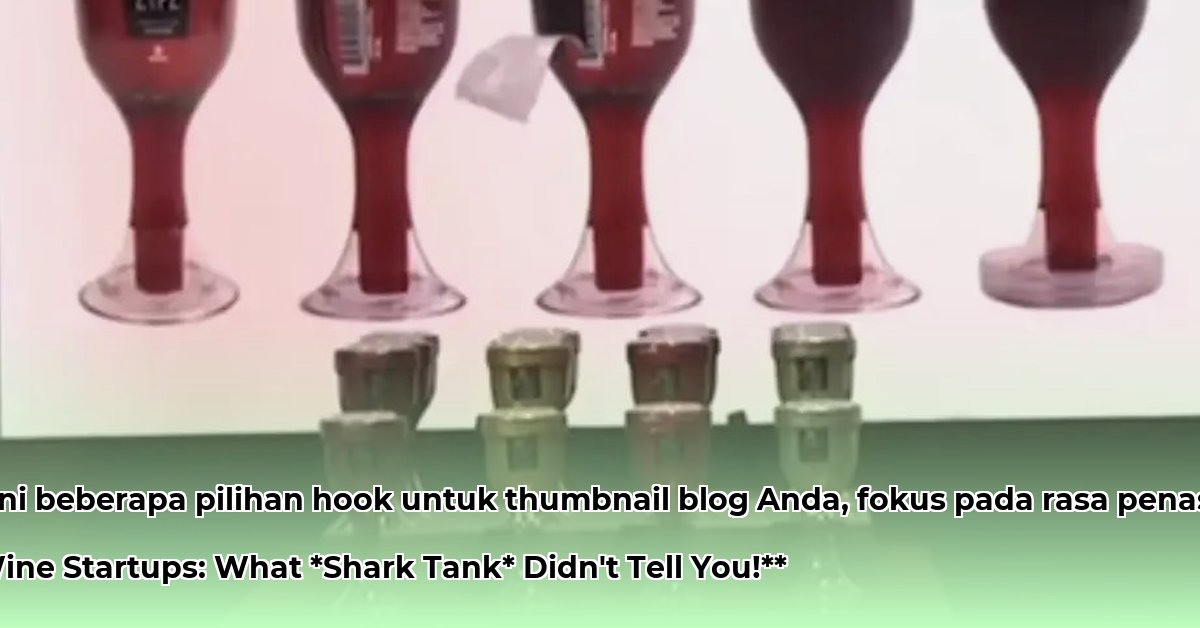
Remember Zipz Wine from "Shark Tank"? They had a cool idea: single-serve wine in a unique glass. Kevin O'Leary invested big, and things looked promising initially. However, the story of Zipz Wine serves as a cautionary tale. It highlights what happened after the cameras stopped rolling, why Zipz Wine couldn't sustain its initial success, and valuable lessons for the wine industry. We will explore the challenges that they faced and explore learnings applicable across the industry, leveraging data from the article Shark Tank's Zipz Wine Net Worth: Lessons for Wine Startups [Reference]. You can read more on Shark Tank analysis.
Innovation and Obstacles in the Wine Industry: The Zipz Wine Case Study
The Zipz Wine net worth story goes beyond initial success. While their single-serve concept attracted attention, they encountered difficulties, ultimately fading away. It's a real-world example of innovation meeting the harsh realities of the market. What challenges did the face and how did they affect the wine business and distribution strategies of similar companies?
How a Novel Idea and "Shark Tank" Appearance Boosted Zipz Wine
Zipz Wine differentiated itself through patented single-serve wine packaging, designed to protect from light and preserve freshness. The "Shark Tank" appearance provided a significant sales boost, a crucial element for any startup. Initial consumer curiosity translated into sales. However, converting that initial boost into sustained growth proved challenging.
The Core Challenges Faced by Zipz Wine
Breaking into the wine industry proved difficult for Zipz Wine, facing several significant hurdles:
- Distribution Difficulties: Securing distribution agreements with major retailers like Costco was a challenge. This limited their access to a broad consumer base.
- High Packaging Costs: The innovative, patented single-serve containers increased production costs, impacting profitability.
- Marketplace Competition: Standing out in the crowded wine market, competing with established brands, was a significant hurdle.
Business Strategy Changes and Eventual Demise
Facing these challenges, Zipz Wine shifted its focus to selling packaging solutions to other businesses, trying to leverage its patented technology. Unfortunately, this pivot wasn't enough to sustain the company. The Zipz Wine website went offline after 2019. How does this affect the future wine packaging business strategy to similar companies in the market?
Critical Advice for New Wine Business Startups
The story of Zipz Wine, while not a success story, provides valuable lessons for entrepreneurs in the wine or beverage industry:
- Thorough Market Knowledge: Deeply understand your target customers, their willingness to pay, and the competitive landscape before developing your product.
- Prioritize Distribution Strategy: Distribution is critical for getting your product to consumers. Develop a comprehensive plan, exploring online sales, partnerships with smaller retailers, and major chain partnerships.
- Embrace Sustainability Practices: Consumers are increasingly environmentally conscious. Ensure your packaging and production are cost-effective and eco-friendly.
Stakeholder-Specific Analysis of the Wine Startup Market
The lessons from Zipz Wine can be tailored to various stakeholders in the wine industry:
| Stakeholders | Short-Term (0-1 Year) | Long-Term (3-5 Years) |
|---|---|---|
| Wine Startups | Conduct exhaustive market research for pricing and cost strategies. | Diversify distribution through niche markets and direct sales. |
| Packaging Innovators | Focus on cost-effective and patent-protected sustainable packaging. | Explore licensing deals with beverage corporations. |
| Investors | Always ensure distribution is practical and scalable. | Consider business models that have sustainability and market traction, beyond initial hype. |
Lessons Learned From Zipz Wine
Zipz Wine demonstrates that innovative ideas alone do not guarantee success. A strong product, "Shark Tank" exposure, and consumer interest are valuable, but they must be supported by a solid business strategy, efficient operations, and a deep understanding of the market. Those who learn from Zipz Wine enhance their chances of success. How does the failure of Zipz Wine emphasize the significance of effective distribution, financial sustainability, and market adaptation in the fiercely competitive wine business?
A Second Look at Zipz Wine: Innovation and Missed Opportunities
Key Points:
- Distribution problems and profitability.
- Importance of distribution agreements.
- Prioritization of profitability after investment.
- Business models adaptability.
- Shark Tank is not a golden ticket.
- Valuable packaging model.
The Zipz Wine Reality
The Zipz Wine history is indicative of many startups. Kevin O'Leary invested \$2.5 million for 10%. Sales rose from 30,000 to 100,000 cases. Initial success doesn't equal final triumph. How does the Zipz Wine failure show the harsh realities of startups.
Distribution Difficulties
One problem of Zipz Wine was no Costco deal. The difficulty of securing shelf space with major retail chains such as Costco. Getting a wide customer base is hard without it. Brand's reach depends on distribution. The wine retail sector has a lot of competitors.
Profitability Struggles
Despite sales, Zipz Wine had trouble gaining profits. The wine sector is competitive, with tight margins. How did Zipz Wine pricing play in market perception.
Strategic Packaging Move
They moved from selling wine to licensing packaging tech. Capitalizing on strength, while avoiding competition. It later became Zipz Packaging. How packaging change benefit wine industries in packaging.
Uncertain Future
The B2B market had problems too. What challenges did the B2B market in packaging face during the transition.
Entrepreneur Advice
Zipz Wine has taught us many business lessons:
- Ensure channels are in place before scaling.
- Focus on profitability not revenue.
- Business models most adapt.
- Shark Tank means not golden ticket.
Market Overlook
The single-serve wine business continues to expand. Competitors filled Zipz Wine's competition. Plan B, or C.
| Aspect | Zipz Wine | Successful Single-Serve Competitors |
|---|---|---|
| Distribution | Failed to secure key retail partnerships | Established robust distribution networks |
| Profitability | Struggled to achieve sustainable profitability | Maintained healthy profit margins |
| Business Model | B2C initially, pivoted to B2B | Combination of B2C and strategic partnerships |
| Market Adaptation | Faced challenges in B2B transition | Continuously adapting to consumer preferences |
The innovation, investment, distribution, stability, and flexibility can fail without planning and implementation. Citation